Can AI be used to detect fake news?

It’s the ultimate irony of the 21st century: The same technology that made it incredibly easy to generate fake news might be our only hope for detecting it.
We are living in the "Post-Truth" era. Deepfakes of politicians are going viral. AI-generated articles are flooding search engines. Your uncle is sharing conspiracy theories on Facebook that were written by a bot farm in a basement halfway across the world.
The question on everyone's mind is: Can we use AI to fight back? Can we build a digital immune system for the internet? The answer is yes, but it’s complicated.
The Scale of the Problem (Why Humans Can't Keep Up)
There is a concept known as Brandolini's Law (also known as the Bullshit Asymmetry Principle):
"The amount of energy needed to refute bullshit is an order of magnitude larger than to produce it."
It takes 5 seconds to ask ChatGPT to "Write a convincing news article about how eating rocks is good for your digestion." It takes a human fact-checker hours to research, verify, and debunk that claim.
We are outnumbered. We need speed. And that is where AI shines.
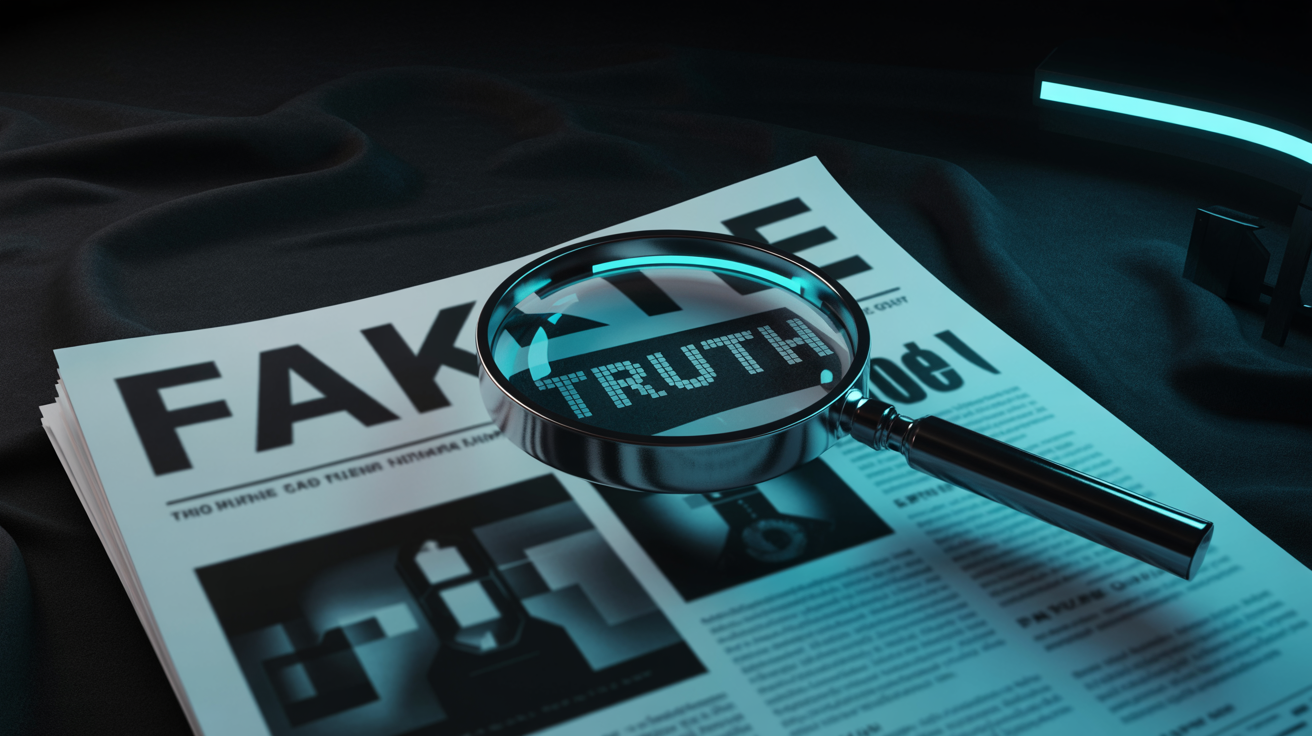
How AI Detects Lies (The 3 Methods)
So, how does a machine know what is true? It doesn't "know" anything in the philosophical sense, but it can detect patterns that humans miss.
1. The Librarian Method (Cross-Referencing)
This is the most reliable method. When an AI sees a claim like "The Eiffel Tower was stolen yesterday," it instantly scans thousands of trusted sources (Reuters, AP, BBC).
If no trusted source is reporting it, the probability of it being fake skyrockets. This is how "Community Notes" on X (formerly Twitter) works, partially powered by algorithms that surface consensus.
2. The Detective Method (Linguistic Fingerprinting)
Fake news often "sounds" different. It uses highly emotional language, excessive capitalization, and specific grammatical structures designed to trigger outrage.
AI models can analyze the sentiment and structure of a text. If an article is 90% anger and 10% facts, the AI flags it as potential propaganda.
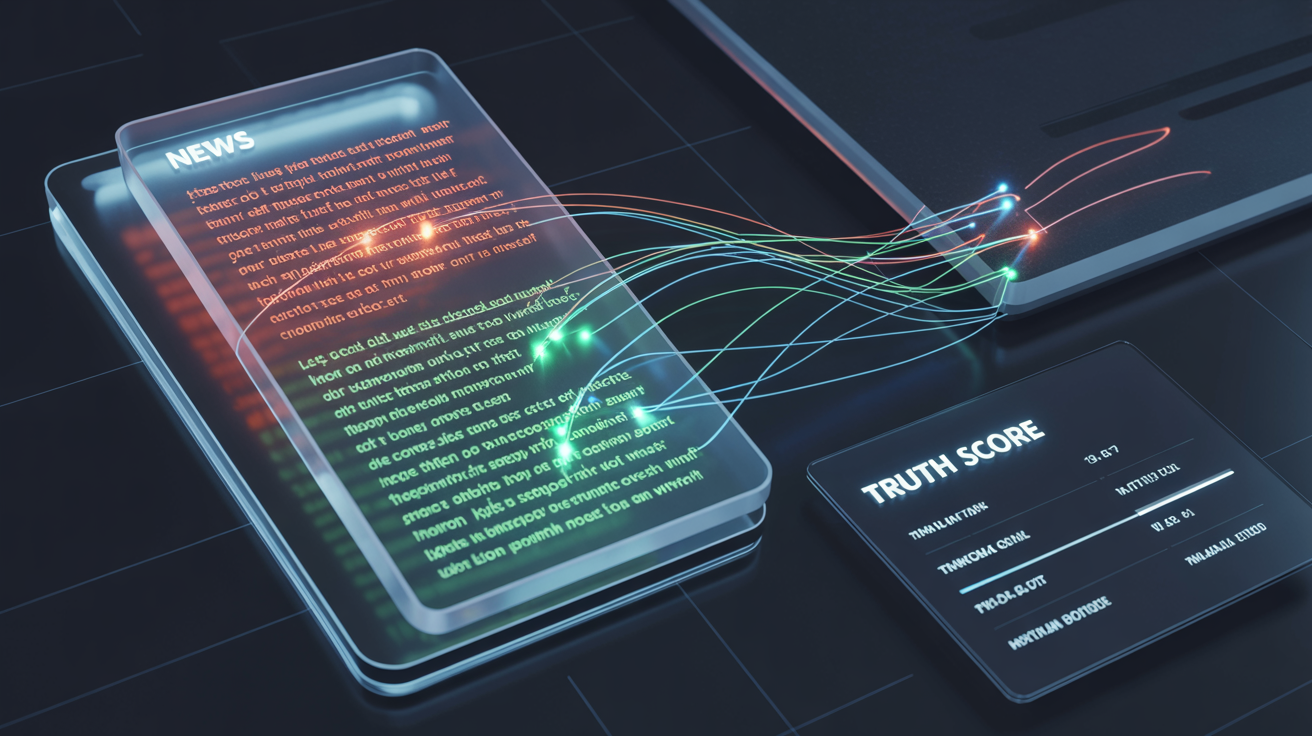
3. The CSI Method (Image Forensics)
For deepfakes and AI-generated images, detection tools look at the pixel level. They look for:
- Inconsistent lighting: Shadows that don't match the light source.
- Strange artifacts: Warped hands, extra fingers, or blurry backgrounds.
- Invisible watermarks: Metadata hidden by the generator (like DALL-E or Midjourney).
The "Liar's Dividend"
Here is the scary part. As AI detection gets better, it creates a new problem called the Liar's Dividend.
If we teach people that "AI can fake anything," then bad actors can dismiss real evidence as fake. A politician caught on tape accepting a bribe can simply say, "That's a deepfake," and 30% of the population will believe them.
Skepticism is healthy. Nihilism is dangerous.
Where AI Fails Miserably
AI is not a magic wand. It struggles with:
🎭 Sarcasm & Satire
AI is notoriously bad at understanding jokes. It might flag a satirical article from The Onion as "False Information," which is technically true but misses the point.
🤏 Nuance
Most fake news isn't 100% fake. It's a kernel of truth wrapped in a layer of misleading context. AI struggles to separate the two.
The Great Arms Race
We are in an arms race. Every time a detection tool gets better, the generation tools get better at evading it.
It's like a game of chess where both players are supercomputers. The only way to win is to verify the source, not just the content. Cryptographic signatures (like C2PA) might eventually allow cameras to "sign" photos the moment they are taken, proving they are real.

Conclusion: Trust, but Verify (with AI)
Can AI detect fake news? Yes, it is a powerful tool in our arsenal. It can process data faster than any human and spot patterns we miss.
But it cannot replace critical thinking. We cannot outsource our judgment to an algorithm. Use AI as a co-pilot for truth, not the arbiter of it.
Fact-check faster with AI Workspace
Use our "Research Analyst" prompt templates to cross-reference claims across multiple AI models instantly.
Get the ExtensionReady to upgrade your workflow?
Join thousands of power users who trust AI Workspace to organize their prompts and conversations securely.
Install for Free